
MHUCC, Green Manor, & Affordable Housing
Green Manor began as an act of imagination and faith.
In 1966, the pastor of Mission Hills and three church members toured a newly built apartment tower for low-income seniors next to Grace Lutheran Church in Hillcrest. The building had been financed through the newly created Department of Housing and Urban Development. When they returned home, they asked a simple but bold question: Why couldn’t our church do that too?
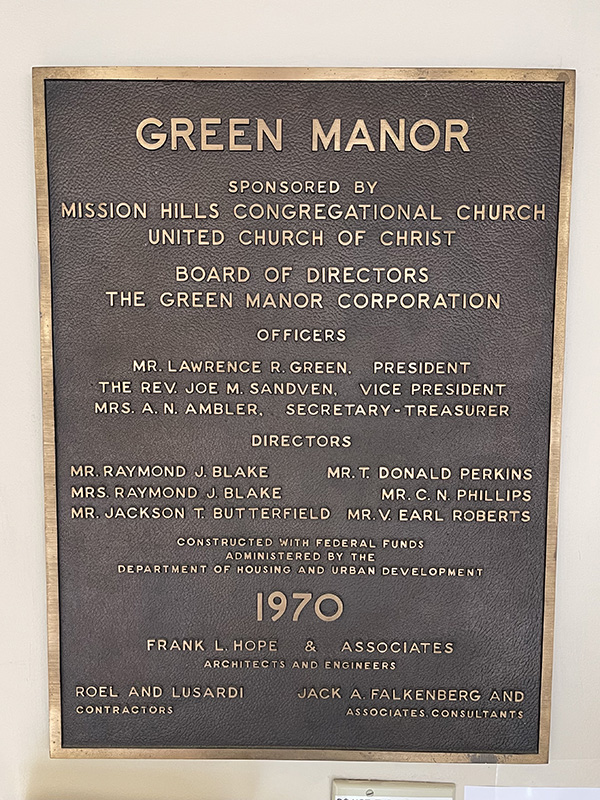
Among those on that visit was longtime church member Lawrence Green. He had been part of the congregation for forty years and possessed both deep faith and considerable resources. When the possibility of building housing near the church emerged, he quietly purchased and held land one block away at Fort Stockton and Ibis. The building would later bear his name: Green Manor, named not for pasture or scenery but for the man whose generosity made it possible.
With land secured, the vision took shape. HUD financed the 13-story building with a $1.5 million loan through the Section 202 program, which helped nonprofit organizations build affordable housing for seniors.
The church itself also took on real risk. As part of the agreement, it committed to help cover operating expenses for the first five years if the building could not sustain itself.
What is often forgotten today is the level of courage this required. When Green Manor was first built, federal housing programs often required the sponsoring organization to stand behind the project financially. Mission Hills United Church of Christ agreed that if the building could not sustain itself, the congregation would help cover operating costs during its early years. More than a few churches stepped away because this was not a symbolic gesture. It was a real financial risk.
Yet the congregation believed something simple and profound: Housing for low-income seniors is a ministry worth risking for.
Construction began in October 1969. Just over a year later, in November 1970, residents began moving in. Over 2,000 applicants waited for one of 150 apartments. The need for safe and affordable housing was overwhelming back then, and continues to be an issue today.
Green Manor will forever be tied to Mission Hills UCC. The church created a nonprofit corporation to oversee ownership and the operations of the property. A governing Board of Directors ensures that Green Manor fulfills its mission.
The pastor serves as a permanent board member, and the majority of directors must come from the congregation, along with valued community members. This structure ensures that the property remains a living expression of the Church’s mission.

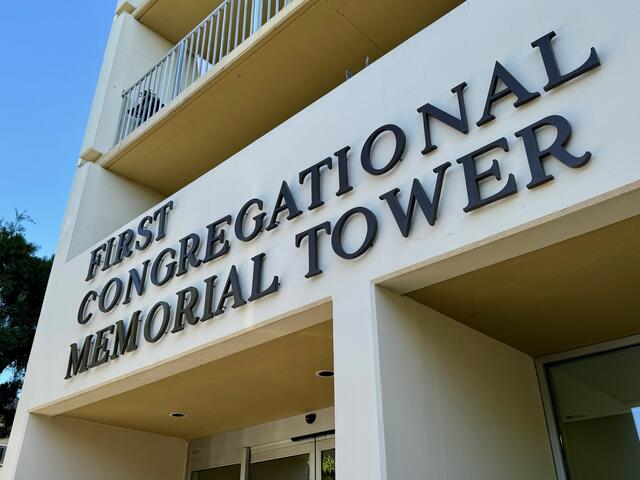
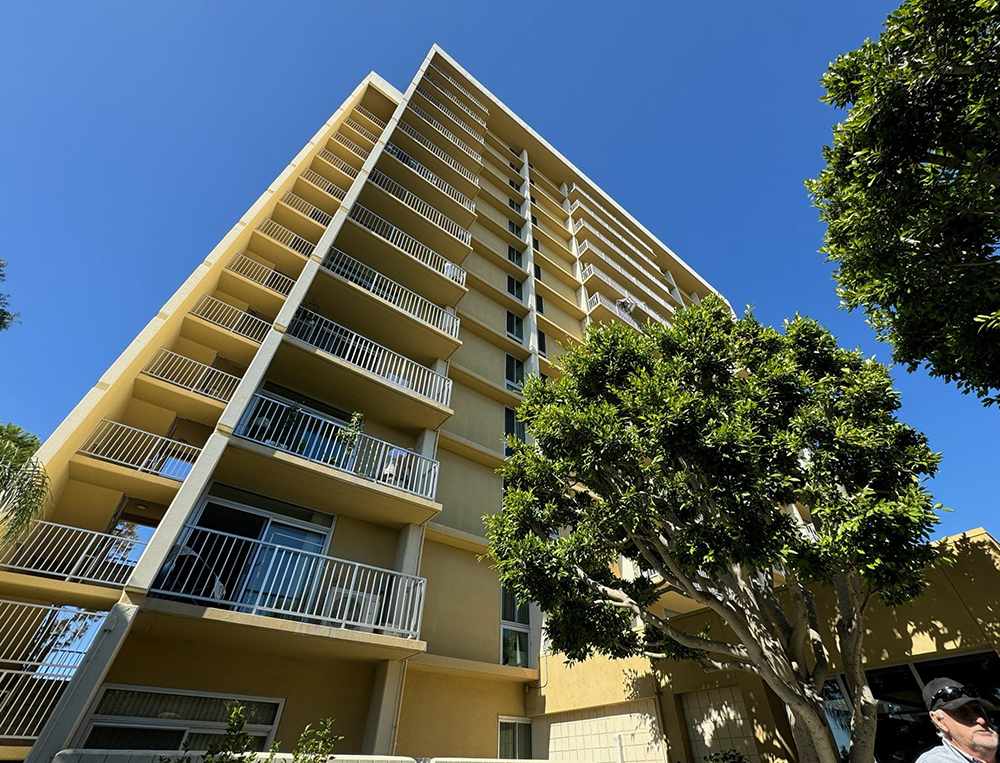
This story was repeated when First Congregational Church merged with Mission Hills. First Congregational had long carried its own dream of providing senior housing in the community. After the merger, that vision was realized. In 1980, another 13-story residence opened on Park Boulevard: First Congregational Memorial Tower.
Today, both buildings operate with Section 8 rental assistance to ensure long-term affordability. Two towers born from two congregations, united into one with the shared conviction: Housing is ministry.
The Next Chapter in the Green Manor Story
In recent years, the Green Manor Board took a bold step forward. Working with an experienced affordable housing developer, the Board was able to recapitalize Green Manor and finance renovations of the building and apartments utilizing the Low Income Housing Tax Credit (LIHTC) program. The Board’s actions generated significant funds to support its mission of creating new affordable housing units and providing support services to improve the lives of our seniors. This rehabilitation of Green Manor ensures another fifty years of service.
The Board still maintains an ownership interest in Green Manor and still owns the land. Following the completion of the tax credit compliance period, approximately 15 years, Green Manor will again become majority owner alongside its development partner, RAHD.
Out of this work, a new organization was formed: Green Vistas. Created to carry this mission into the future, Green Vistas serves as a vehicle for developing and supporting new affordable housing opportunities for low income seniors. What began as a single building has become a growing movement.
That movement has now reached an important milestone.
With closing in February 2026, land has been purchased in Hillcrest, just a mile from the church, for the development of 75 new affordable apartments for seniors. This marks the first ground-up construction project in this new chapter of mission and ministry. It is only the first of many more to come.
None of this work happens alone. In partnership with local affordable housing developers, Hampstead Companies and Trestle Build, Green Manor created Fourth and Penn Community Partners, LP, to develop the project in Hillcrest. Through Green Vistas, the Board has provided funds to purchase the site and made a substantial early commitment to provide gap financing during construction. Our participation also includes design input to ensure a vibrant community life, not just a physical building.
This project is only the beginning. Green Vistas was created with the intention of supporting the creation and preservation of many future developments, extending the legacy first imagined decades ago. What began with one building has grown into a broader commitment to ensure that affordable senior housing in San Diego continues to rise wherever it is needed.
Housing is one part of a larger mission. Green Manor’s mission also includes significant charitable contributions and grants to local nonprofit organizations instrumental in providing services for seniors. These include supporting shallow rent subsidies to curtail evictions and to help older adults remain in their homes, a weekly meal and activity program at Mission Hills UCC, and support for other UCC congregations to explore developing affordable housing via SB-4 – a California law to facilitate building affordable housing on church-owned land.
First Congregational Memorial Towers (FCMT) is following a similar script. Like Green Manor, the board of FCMT is also comprised of the pastor and majority members of Mission Hills UCC. FCMT is working with a development partner to recapitalize the property and finance renovations of the building and its 100 residential units. This process will yield funds to pursue additional affordable housing opportunities in San Diego.
The vision that began in 1966 did not end with one tower.
It did not end with two.
It is still rising.
Green-Manor-3-4
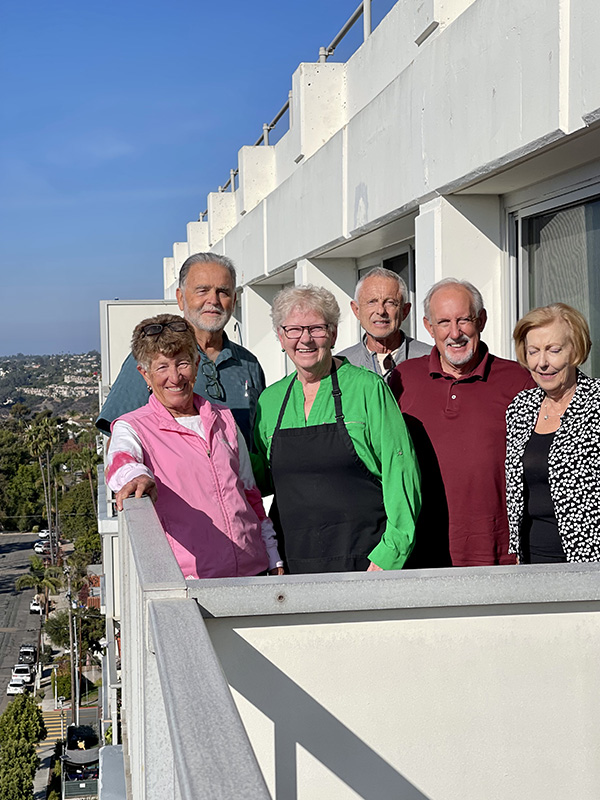
Members of the 2023 board included: Betsy McIntyre, Dave Snodgrass, Ruth Henricks (former long-time board president), Tim Wolf, Bruce Ramet, Elaine Balok

Sunday-School-Christmas-Caroling-at-Green-Manor_6x3
Annual church children’s choir visit to sing Christmas carols

Caroling-at-Green-Manor-2025-2-12-14-25
Members of the church children’s choir during the annual Christmas caroling visit
Green-Manor-1-1
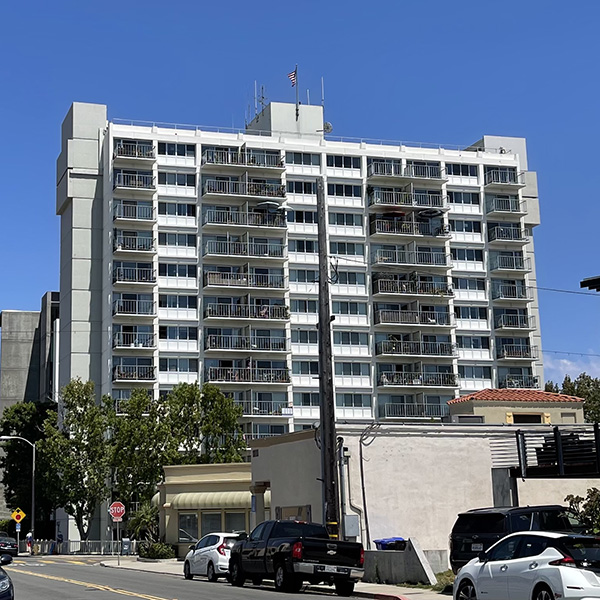
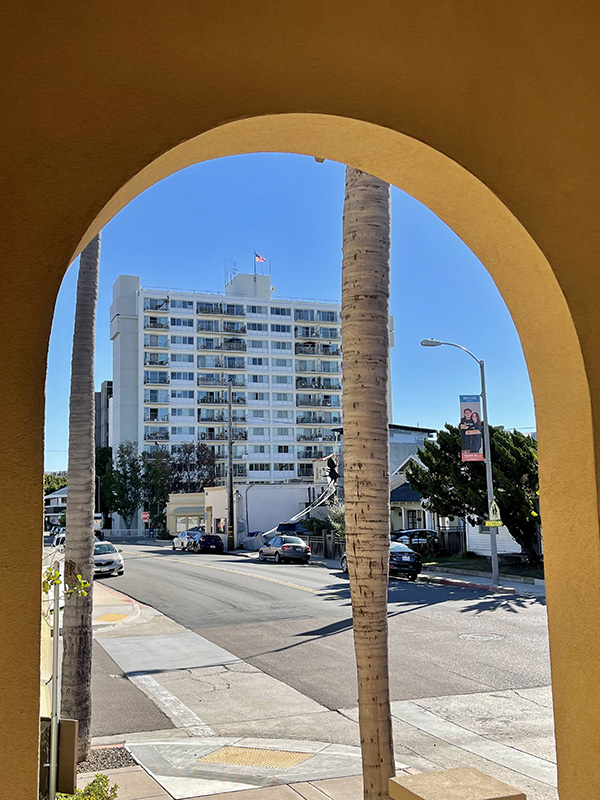
Green Manor as seen from MHUCC
green_manor2022-scaled
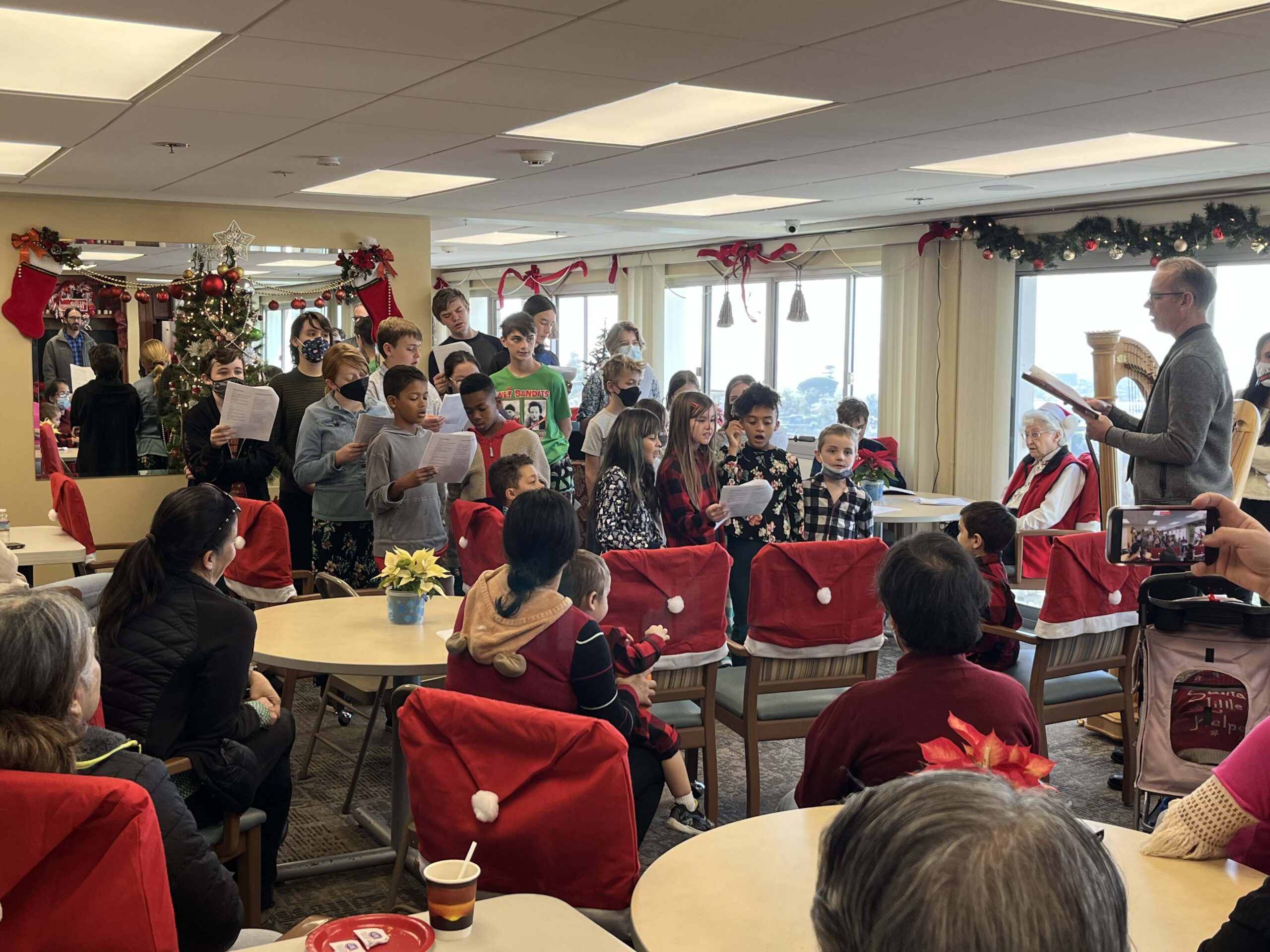
Annual church children’s choir visit to sing Christmas carols